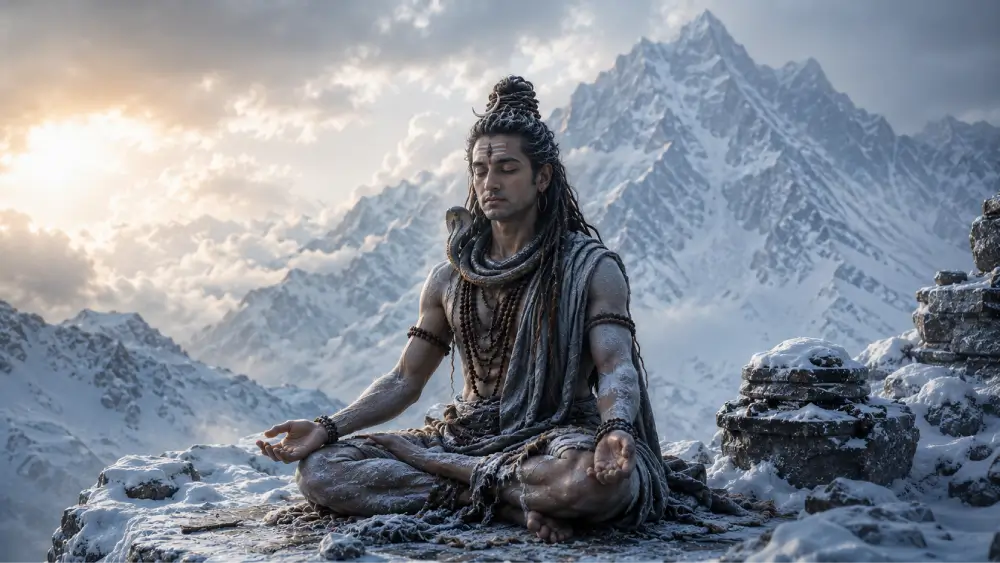
The Mahamrityunjaya mantra is a Shiva-related mantra from the Vedas.
The mantra starts: Om Tryambakam Yajamahe — and we find that version of the mantra in both the Rig and the Yajur Veda.
The mantra addresses Tryambaka, meaning “one with the three eyes.”
The Sanskrit Mantra
A commonly recited form is:
ॐ त्र्यम्बकं यजामहे
सुगन्धिं पुष्टिवर्धनम् ।
उर्वारुकमिव बन्धनान्
मृत्योर्मुक्षीय मामृतात् ॥
The exact transliteration and pronunciation can vary slightly between traditions. Listen Now
What Does It Mean?
A broad translation suggests a prayer to the three-eyed Shiva to be delivered from the bondage of death, to be set free, and to be united with immortality.
The mantra uses the image of a fruit that has ripened, falling free from its vine. It is poetic and symbolic, and rich spiritual meaning is assigned to different levels of the mantra by different commentators.
Why Is It Called Mahamrityunjaya?
This title suggests that this is the primary mantra for overcoming death.
It is important to understand this within its spiritual context: the mantra is a prayer for courage, surrender and freedom that devotees pray for, not a claim of literal escape from mortality.
At What Times Is the Mantra Recited?
The mantra may be recited in the morning, during Shiva worship, meditation, Rudrabhishek, Shravan, and Mahashivratri.
A Quiet Way to Listen
Recitation of the mantra may be done at a slow pace. Sit and listen, and read the Sanskrit version to understand the words.
It is beneficial to remain quiet for some time afterward. The silence after a mantra can be as meaningful as the mantra itself.