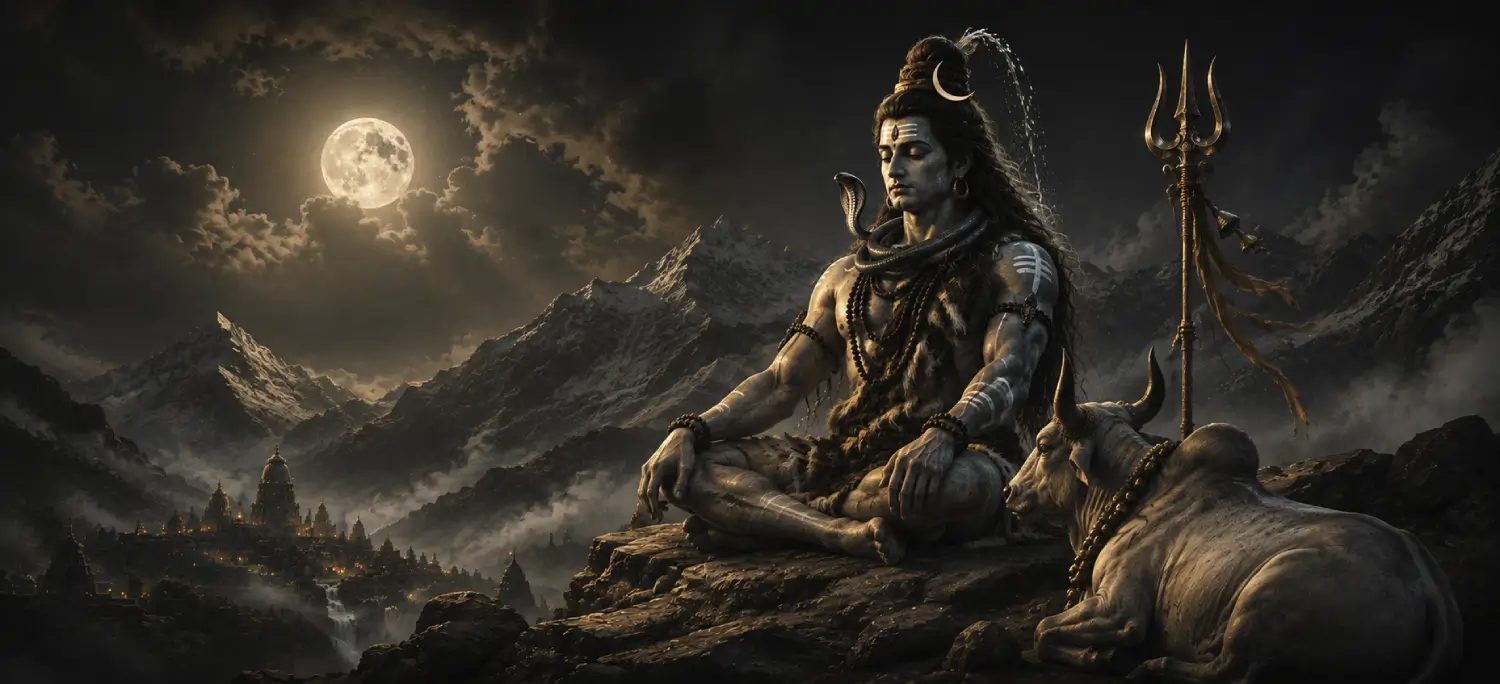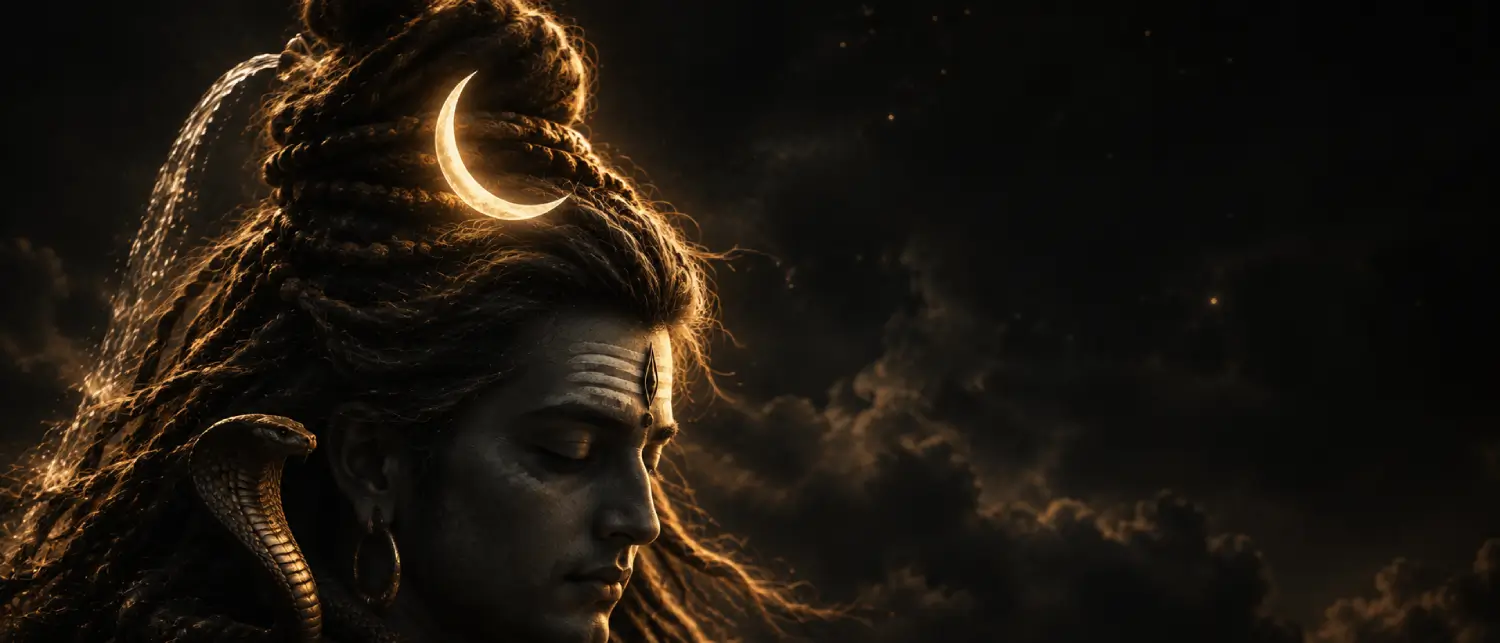
Traditionally, Shiva’s art represents his image as containing a single, small crescent moon. Most often, it is depicted as residing in his hair.
The crescent moon does not represent any arbitrary decoration. Decorations come and go; the moon does not. The moon represents change, cycle, and the ephemeral nature of the universe.
The Story of Chandra
One of the many accounts is that Shiva is the Lord of Chandra, the moon.
Chandra married Daksha’s many daughters, but Daksha had a problem when Chandra focused mainly on taking care of one of his daughters, Rohini. He cursed Chandra.
When the story progresses, Chandra sought refuge with Shiva. Shiva’s grace was on Chandra to remain in his hair and to assist Chandra to continue to cycle and to let the moon wax and wane.
Rohini, as the moon’s wife, creates the full moon. The cycles represent the passage of time.
Shiva and Mahakala
Shiva is also closely linked to Mahakala. So it is understandable that Shiva is represented in an image with the crescent. It represents everything which is visible and is constantly changing. Shiva represents stillness.
The crescent moon in Shiva’s art is not arbitrary. Take a close look next time you see a Shiva image.
It shows the passing of time and is a reminder of change and cycles. This makes the symbol surprisingly relevant even today.